 EN
EN

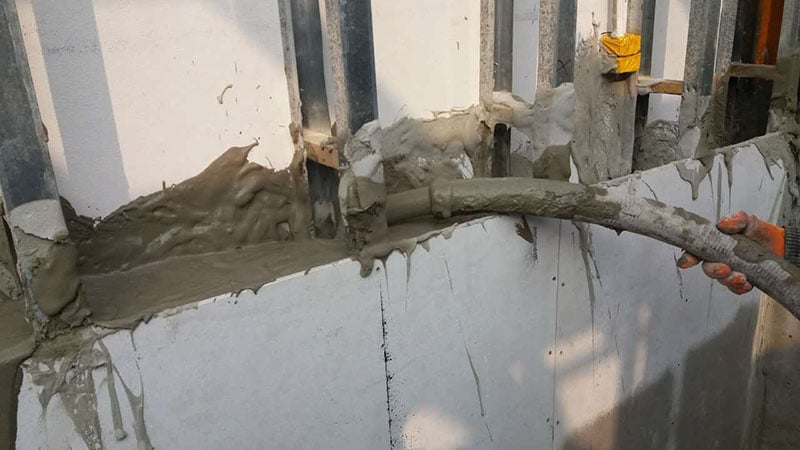
Complete Guide to Foam Concrete Cast-in-Situ Wall Construction | Advantages, Process & On-site Cases
1. Introduction
Traditional solid block walls, cement block walls have long plagued construction projects with heavy self-weight, poor heat preservation, slow manual masonry speed, and easy hollow cracking after wall forming. In recent years, cast-in-situ foam concrete wall technology has become the mainstream light wall construction scheme for villas, steel structure buildings, prefabricated houses, and renovation projects, relying on ultra-light bulk density, integrated heat & sound insulation, one-time integral pouring forming, and high construction efficiency.
Different from prefabricated wall panels that require splicing and secondary plastering, cast-in-situ foam concrete walls are directly mixed and poured on site with professional foaming equipment, forming an integrated seamless wall body. Today we will break down its core strengths, standard construction procedures, applicable scenarios and real project effects for builders, contractors and property developers.
2. Core Advantages of Foam Concrete Cast-in-Situ Wall
2.1 Ultra-light self-weight, greatly reduce building load
The dry density of finished foam concrete wall ranges from 300–800kg/m³, only 1/3–1/5 of ordinary concrete. For steel frame, light steel villa and high-rise secondary structure projects, it effectively lowers the foundation and beam-column bearing pressure, cuts the overall structural engineering cost by 10%-18%.
2.2 Integrated thermal insulation & sound insulation, save secondary insulation process
Closed-cell porous internal structure brings permanent heat insulation performance, thermal conductivity ≤0.12 W/(m·K). Walls do not need external wall thermal insulation mortar additionally; 120mm thick foam concrete wall achieves the energy-saving standard of 370mm clay brick wall. The porous buffer layer can weaken air impact noise, meeting residential interior wall sound insulation requirements.
2.3 One-time integral pouring, seamless anti-crack & waterproof
Continuous on-site pouring eliminates splicing gaps of precast blocks, effectively avoids common quality problems such as wall hollowing, vertical/horizontal cracks. The material has low water absorption, uniform internal structure, excellent anti-seepage performance, suitable for basement partition, bathroom inner wall, external enclosure wall.
2.4 Fast construction speed, save labor & construction period
Support simple formwork, use professional foam concrete mixing & pumping integrated equipment for continuous feeding pouring. One construction team can finish 80–120 square meters of wall per day, 2–3 times higher efficiency than manual block laying. No need for block transportation, stacking, mortar mixing links, greatly reduce on-site labor demand.
2.5 Fire-resistant, environmental & recyclable raw materials
Class A non-combustible inorganic material, fire resistance limit over 3 hours, far superior to gypsum board, lightweight composite panels. Raw materials: cement, foaming agent, industrial admixture, no harmful volatile substances, completely meet green building material standards, widely used in domestic and foreign export construction projects.
3. Standard Construction Process of Cast-in-Situ Foam Concrete Wall
Step 1: Site measurement & formwork support
Lay out wall lines according to construction drawings, install fixed steel/wood formwork on both sides of the wall, reinforce with pull bolts to prevent expansion and slurry leakage during pouring. Reserve door and window openings in advance.
Step 2: Equipment debugging & raw material proportioning
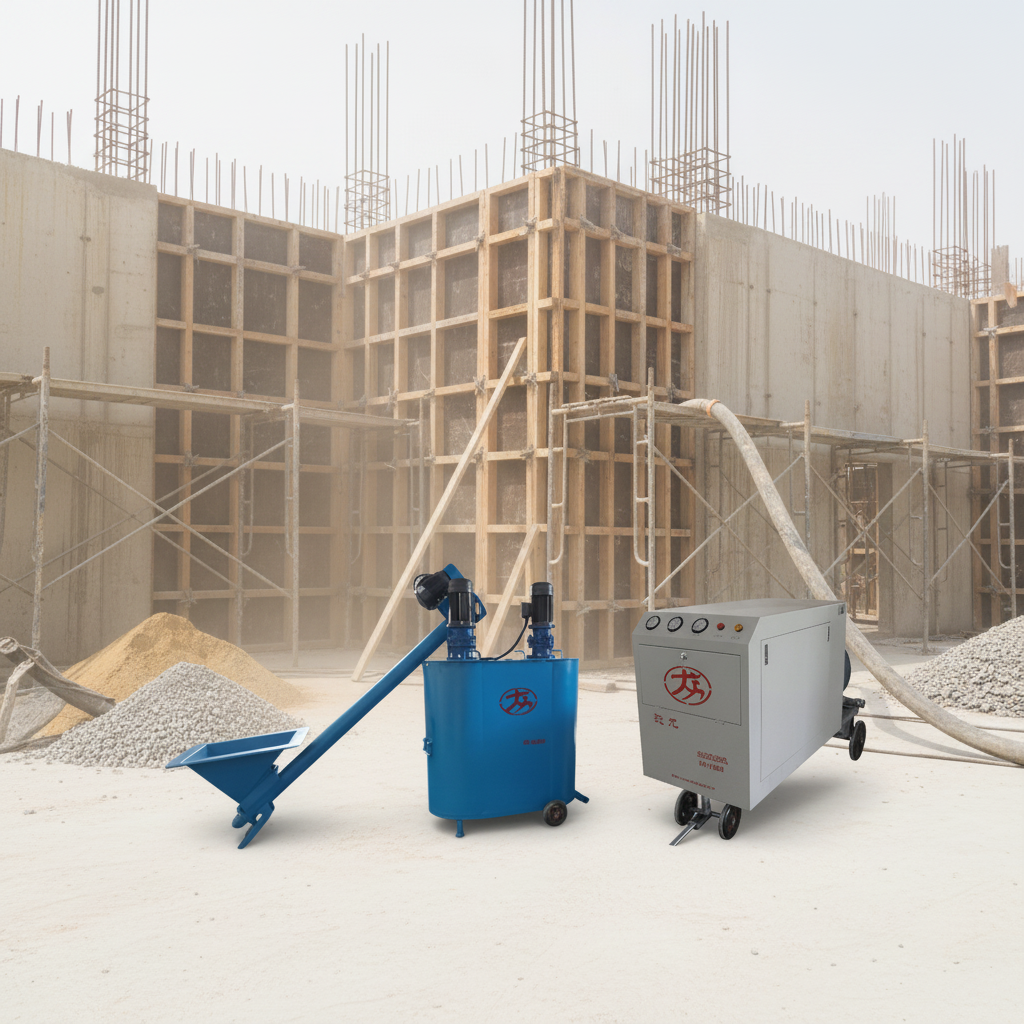
Deploy foam concrete mixing pumping machine (mixer + foaming host ). Proportion cement, water, special foaming agent strictly according to construction formula, adjust foaming multiple to control wall density.
Step 3: On-site mixing & continuous pumping pouring
The equipment automatically feeds and mixes raw materials, generates uniform stable foam slurry, conveys slurry to formwork cavity through delivery pipeline. Pour layer by layer to avoid slurry segregation, control single pouring height to prevent formwork deformation.
Step 4: Natural curing & formwork removal
Complete pouring in one time for single wall section, natural curing for 24–48 hours before removing formwork. Continue watering curing for 3–5 days to ensure wall strength stably rises.
Step 5: Surface finishing & subsequent decoration
The wall surface after formwork removal is flat, only simple plaster leveling is needed, directly proceed with putty, paint, tile and other decorative construction without extra leveling treatment.
4. Widely Applicable Construction Scenarios
1. Light steel villa / prefabricated house internal partition & external enclosure wall
2. High-rise building secondary structure non-load-bearing partition wall
3. Old community renovation, office space, shopping mall partition wall
4. Basement partition, underground space fireproof insulation wall
5. Low-rise self-built house, rural villa integrated wall pouring
6. Overseas engineering residential wall, factory workshop lightweight partition
5. On-site Construction Equipment Matching Recommendation
Stable wall pouring effect relies on professional supporting equipment:
- Integrated stirring tank: Automatic feeding, uniform mixing of cement slurry, stable foaming ratio, avoid artificial proportion error
- Foam concrete main machine: High-pressure stable pumping, long-distance horizontal & vertical conveying, adapt to multi-floor wall construction
The complete set of equipment has small floor space, convenient mobile on site, simple operation, and foreign construction workers can master the operation after short training, very suitable for foreign construction contracting projects export supporting.
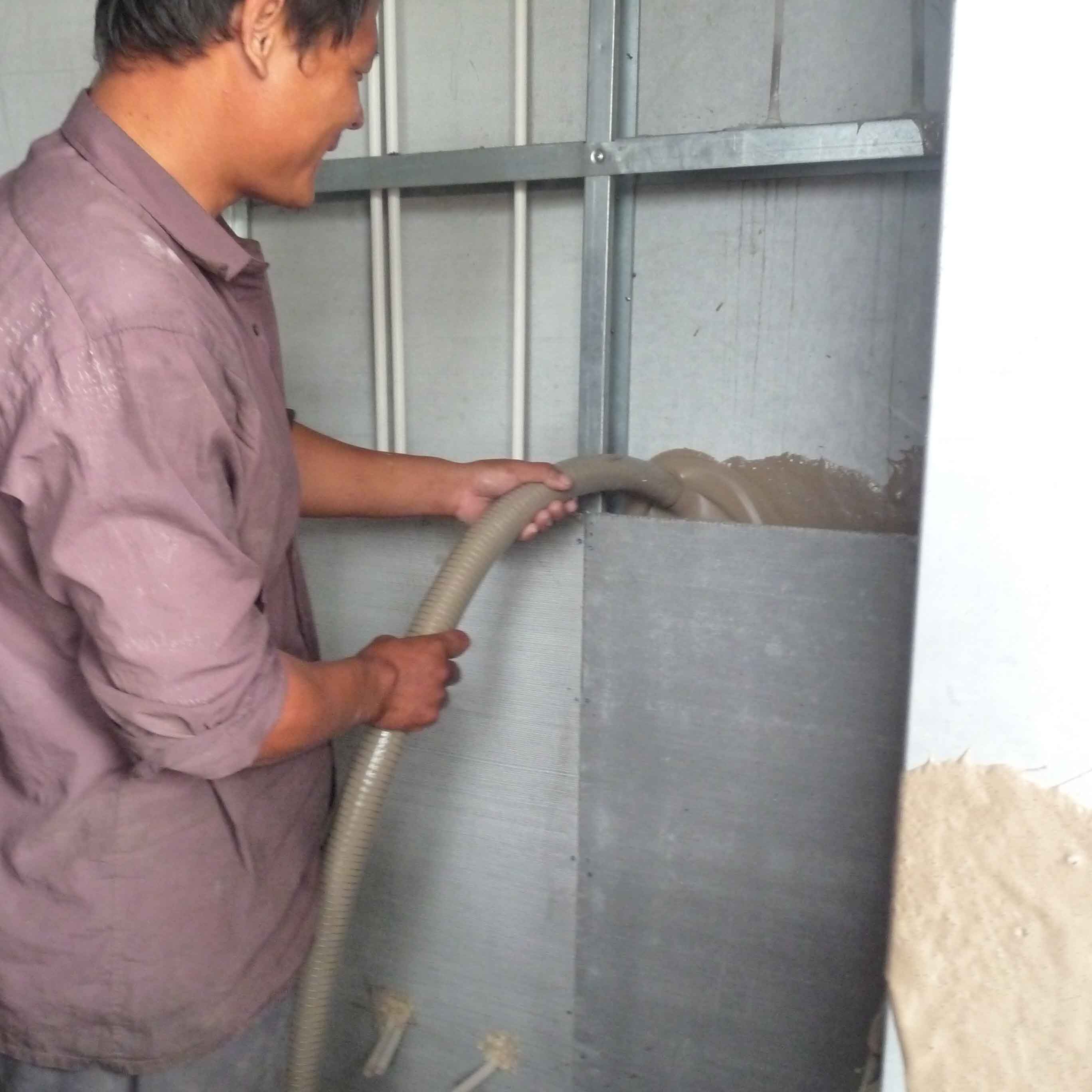
6. Common Q&A for Cast-in-Situ Foam Wall Construction
Q1: Can foam concrete walls bear hanging cabinets, air conditioners?
A: After 7-day curing, the wall surface strength reaches the design standard. Use special expansion bolts for wall hanging parts; it can bear daily household hanging loads such as cabinets, water heaters, air conditioners.
Q2: Is the wall easy to crack after long-term use?
A: Integral pouring without splicing gaps, shrinkage rate is far lower than aerated blocks. Cooperate with standard curing process, no cracking phenomenon in long-term use of completed projects.
Q3: Can this construction technology be used for overseas construction projects?
A: The complete set of equipment and foam concrete raw materials support export, construction technology is simple and easy to promote, widely recognized by construction contractors in Southeast Asia, Middle East, Africa and other regions. Our equipment has independent national patents, stable quality, and provides overseas after-sales technical guidance.
7. Conclusion
As energy-saving and lightweight building requirements keep upgrading, cast-in-situ foam concrete wall technology will gradually replace traditional block masonry as the preferred scheme for new wall engineering. It balances construction efficiency, building safety, energy-saving performance and comprehensive cost, bringing higher profit margin for construction enterprises and better living experience for house owners.
If you are looking for efficient lightweight wall construction solutions and matching foam concrete pouring equipment, welcome to contact us for construction cases, equipment parameters and on-site technical guidance.