 EN
EN

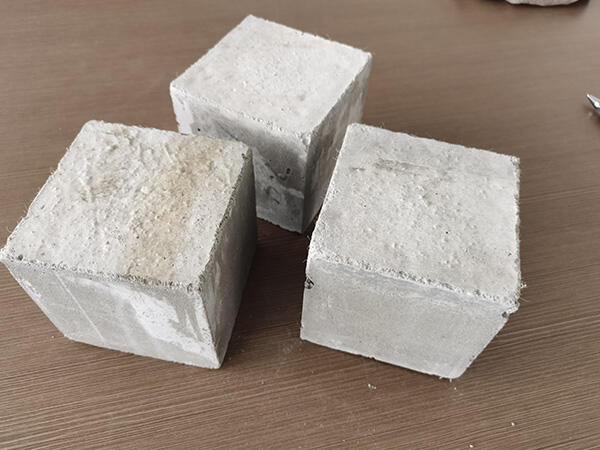
1: High heat resistance. Polystyrene board begins to decompose at 74 ℃, and as the temperature continues to rise, it will melt and shrink. Foam concrete is cement inorganic material. Heat resistance can reach over 1000 ℃, without thermal decomposition, resulting in a longer service life and no insulation failure.
2: Green and environmentally friendly, non-toxic and harmless. Foam concrete does not contain any toxic ingredients, and foaming agents and various admixtures are free of volatile harmful substances, which is conducive to the indoor environment. However, polystyrene board will release toxic gas styrene due to thermal decomposition.
3: Better strength than polystyrene board. The compressive strength of polystyrene board is only 0.02-0.03mpa, while the compressive strength of 200-300kg/m ³ foam concrete is 0.6-0.8mpa, so the compression resistance is better.
4: The usage cost is lower. The total cost of foam concrete is 30% -40% lower than that of polystyrene board, which has obvious economic advantages.
5: The construction speed is fast. The foam concrete can be poured and leveled without laying one by one, and its construction speed is one third faster than that of polystyrene board.
6: There are no seams, reducing the heat loss caused by seams. And polystyrene board, because it is laid one by one, has many seams, which can easily form cold or hot bridges.