 EN

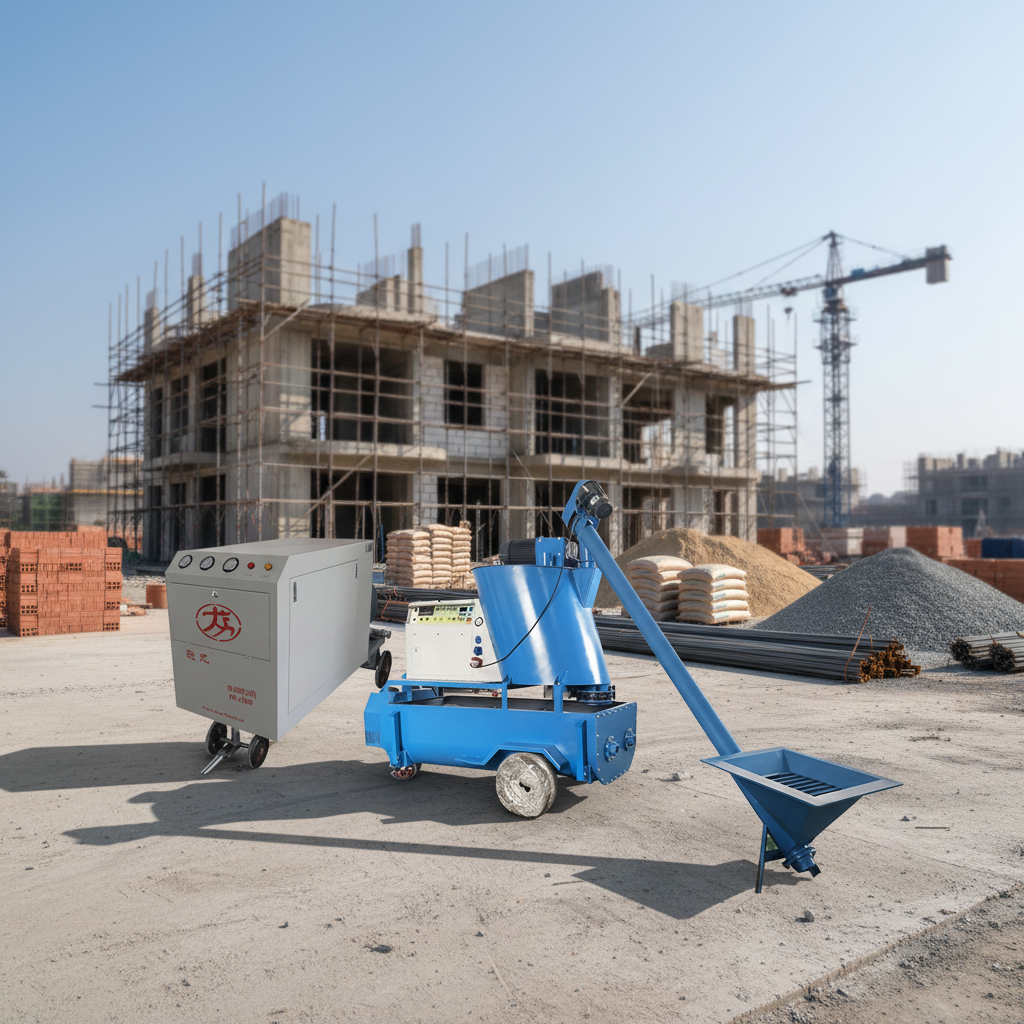
Foam Concrete Equipment for Cast-in-Place Wall Construction: The Future of Lightweight Monolithic Walls
Traditional block masonry has long been the standard for building partition and infill walls. But block laying is slow, labor-intensive, and creates segmented walls with joints prone to cracking and thermal bridging. Today, foam concrete cast-in-place wall technology, powered by integrated foam concrete equipment, is changing how contractors build walls worldwide.
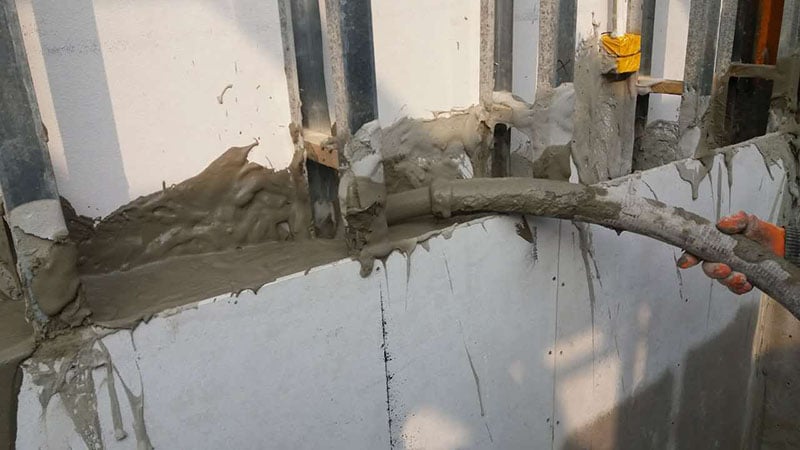
Instead of stacking blocks one by one, teams assemble formwork on site, then use foam concrete machines to produce stable foam, mix it with cement slurry, and pump the free-flowing material directly into wall formwork cavities. After curing, you get a seamless, monolithic lightweight wall with built-in thermal and acoustic insulation.
How Foam Concrete Equipment Works for Wall Casting
A complete foam concrete system integrates foaming unit, mixing tank, feeding system and pumping pipeline.
1. The foaming generator mixes foaming agent and water to produce uniform, stable closed-cell foam.
2. Cement, water and optional fine fillers are mixed into homogeneous cement slurry.
3. Preformed foam is blended into the slurry to create pumpable foam concrete. Dry density can be adjusted from 300–1200 kg/m³ according to wall design requirements.
4. The liquid foam concrete is pumped through pipelines into pre-installed wall formwork. Excellent fluidity lets the material fill every corner automatically; no vibration compaction is needed.
5. Layered pouring is carried out to avoid segregation. After curing, the formwork can be removed to reveal an integral solid wall.
The whole process is mechanized. One crew can finish 80–120㎡ of wall area per day, 2–3 times faster than brick masonry. It supports vertical pumping up to 100 meters, ideal for multi-storey building construction.
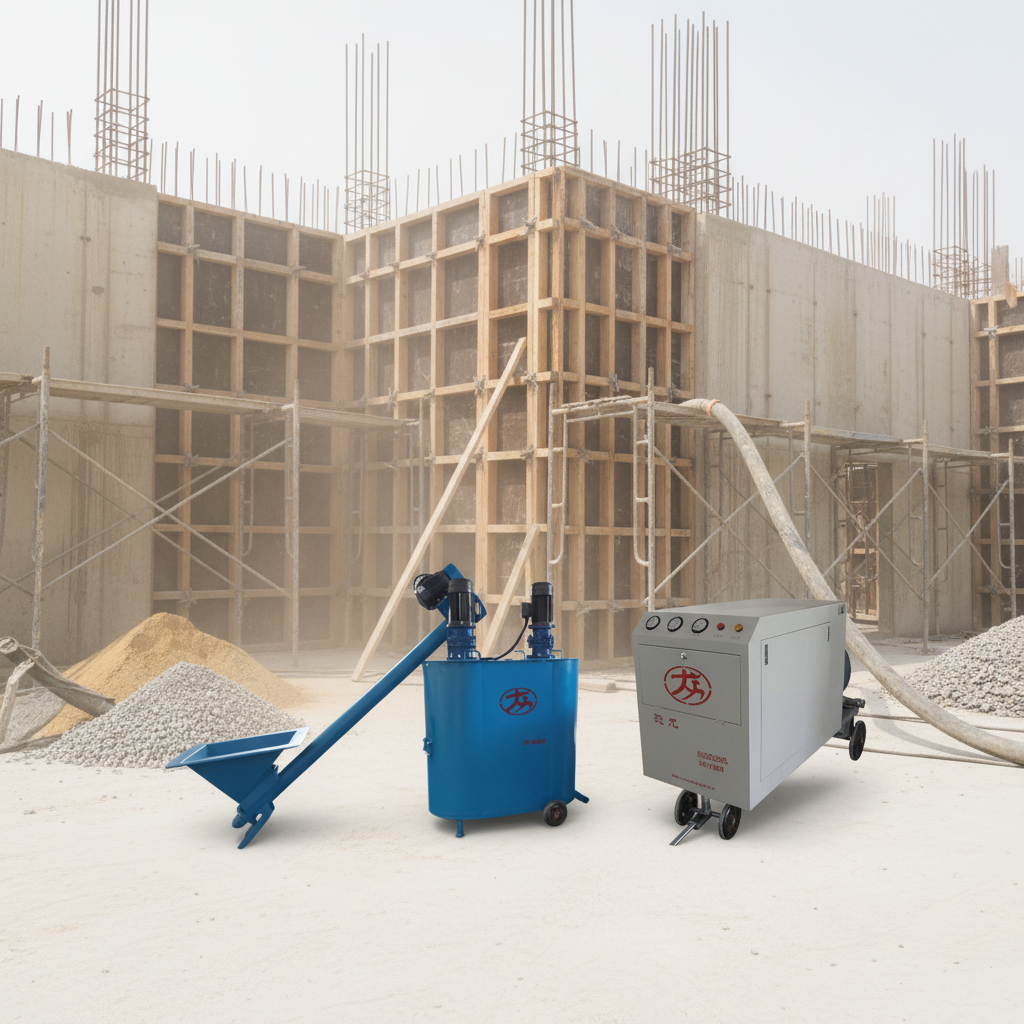
Core Advantages of Cast-in-Place Foam Concrete Walls
✅ Lightweight, Reduce Structural Load
Foam concrete wall weighs only 1/3 ~ 1/5 of clay brick walls. Lower dead load cuts foundation pressure and reduces steel and concrete consumption for the whole building. It is especially suitable for villas, steel frame buildings, renovation and low-rise housing projects.
✅ Integrated Thermal & Sound Insulation
Closed-cell porous structure delivers low thermal conductivity (0.09–0.17 W/(m·K)). A 120 mm foam concrete wall achieves insulation performance equivalent to a 490 mm clay brick wall. It eliminates separate external insulation work. Meanwhile, porous structure improves sound insulation for partition walls in apartments, hotels and offices.
✅ Excellent Fire Resistance
Foam concrete is inorganic, non-combustible. A 120mm wall can sustain fire resistance over 4 hours. It protects steel frames from high temperature and improves building fire safety.
✅ Monolithic Structure, Less Cracking
Unlike block walls with many mortar joints, cast-in-place wall forms one solid piece. Joint-free structure greatly reduces hollowing and cracking issues. The wall surface is smooth after formwork removal; in many cases, thick plastering can be skipped, saving materials and labor.
✅ Convenient Pre-embedding of Electrical Pipes
Wiring boxes and pipelines can be fixed inside formwork before pouring. The foam concrete wraps around pipes tightly, avoiding the chiseling work required on brick walls.
✅ Eco-Friendly & Less Construction Waste
Foam concrete can use fly ash and other industrial by-products as fillers. On-site pouring cuts down broken block waste. The material is non-toxic and fully compatible with green building standards.
Typical Application Scenarios
- Internal partition walls for residential buildings, apartments and villas
- Infill walls for light steel frame buildings
- Commercial buildings, hotels, schools and office interior walls
- Low-carbon green building and energy-saving renovation projects
- Low-rise housing construction in Africa, Southeast Asia and Latin America
What to Pay Attention to During Cast-in-Place Wall Construction
1. Formwork must be rigid and sealed to prevent slurry leakage and deformation under lateral pressure.
2. Pour in thin layers, do not pour the whole wall height at once to avoid material segregation or formwork bulging.
3. Control foam stability, slurry density and water ratio via the foam concrete machine to guarantee consistent wall strength.
4. Keep proper moisture curing for at least 7 days after pouring to reduce shrinkage cracks.
Final Thoughts
Foam concrete cast-in-place wall technology is not only a material upgrade, but a full mechanical construction solution. With reliable foam concrete equipment, builders can cut project timelines, lower total construction cost, and deliver walls with thermal insulation, sound insulation and fire resistance in one single step.
For contractors looking for faster, greener and more reliable wall construction methods, foam concrete on-site pouring is a competitive alternative to traditional masonry.
If you want to know more about foam concrete equipment specifications or project case studies, contact our team today.